Türkçe
 N Kolay Targets the Digital Transformation of the "Unbanked" Population
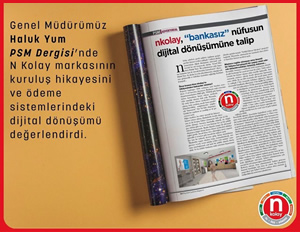
PSM AdvertorialN Kolay branches will play a very important role in the transition to a cashless society as well as in the digital transformation of approximately 7 million N Kolay customers. N Kolay General Manager Haluk Yum says "These points also offer important opportunities for banks closing branches"... We talked with Haluk Yum about N Kolay's founding story, where it has reached, and the benefits it provides in terms of entrepreneurship and employment...
Can you briefly tell us the story of N Kolay?
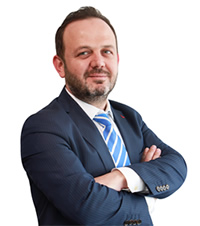
Haluk YUM
N Kolay Payment and Electronic Money Institution Inc.General Manager
The project dates back to the end of 2006, nearly 15 years ago. While working in the bank's cash management department, we noticed the difficulties that institutions producing bills — like İSKİ and TEDAŞ — were experiencing with bill payment centres. Payment centres had suddenly appeared in the market and spread rapidly, but alongside this, fraud and victimisation multiplied, creating a group known as "faturazede" (bill victims). Because these structures had neither legality nor any guarantee. On the other hand, this sector had emerged to meet an important need and had become a good solution for those who did not have bank accounts or could not maintain a balance. After all, households are obliged to pay at least 4-5 separate bills such as electricity, water, natural gas, and telephone every month. Without a widespread alternative outside of banks, payment centres naturally became very popular. However, as I mentioned earlier, the structure had an important vulnerability in terms of security and formality.
So you prevented fraud by reforming a structure that was unregulated but met an important need... Absolutely. After all, at that time there was no Law No. 6493, nor any legal framework. Of course, we did not only reform a problematic service area. We also helped hundreds of families establish their own businesses. Currently, around 600 families own their own business and approximately 2,000 jobs are provided. Considering that an investment of hundreds of millions of TL is required for 2,000 jobs in our country under current economic conditions, you can see how valuable the work that has emerged is.
After all, you are both responding to citizens' needs in their own neighbourhood and creating 2,000 jobs with modest service fees. In addition to concept stores engaged exclusively in this business, we increased the prevalence of our service network and provided additional income opportunities for tradespeople by placing kiosks in nearly 4,000 tradespeople using the "shop in shop" model.
Because we structured our dealership network as a sharing commercial model rather than shareholder capitalism, and operated with the mindset of "The representative must first have income to survive; if they earn, we earn," we grew continuously both in numbers and network reach over 15 years and built a loyal dealership network.